

Intellectual Disabilities
Arts, music, games, exercise and everyday life skills. Here is what adults with intellectual disabilities actually do at a day program, and how the activities are chosen for each person.
Penn Village is a licensed adult day care center in Germantown, Philadelphia. Adults spend the day with us taking part in structured activities, eating meals together and spending time with friends, with staff and nursing support nearby, and then go home in the evening.
Families looking at day programs for an adult with an intellectual disability usually want to know two things: what will my family member actually do all day, and will it suit them? This article answers both, starting with the basics.
What is a day program for adults with intellectual disabilities?
A day program for adults with intellectual disabilities is a structured service where adults spend the day in a safe, supervised setting outside the home. It combines activities, skill-building, meals, personal support and social time so that each day has a purpose.
Participants arrive in the morning, follow a daily routine, and return home at the end of the day. The person keeps living at home with their family, and the family has dependable support during the week.
Most programs include the same core services:
- Supervision and support from staff throughout the day
- Group activities for social interaction
- Skill-building opportunities
- Recreational and creative outlets
- Nutritious meals and snacks
- Supervised exercise to keep bodies moving and healthy
At Penn Village that also means nursing oversight with a registered nurse on staff, a catered breakfast, lunch and afternoon snack approved by a nutritionist, and door-to-door, wheelchair-accessible transportation.
What activities do adults with intellectual disabilities do at a day program?
Day program activities are designed to combine fun, learning and socialization. Each one is chosen with a purpose, whether that is building confidence, practicing a skill or simply enjoying time with friends. These are the main types of activities at Penn Village.
Arts and crafts
Painting, drawing and craft projects are some of the most popular activities. Projects are chosen so participants can build and create safely with minimal help, and finished artwork goes up on the walls of the center. Creative work builds fine motor skills and gives people something to be proud of.
Games that practice skills
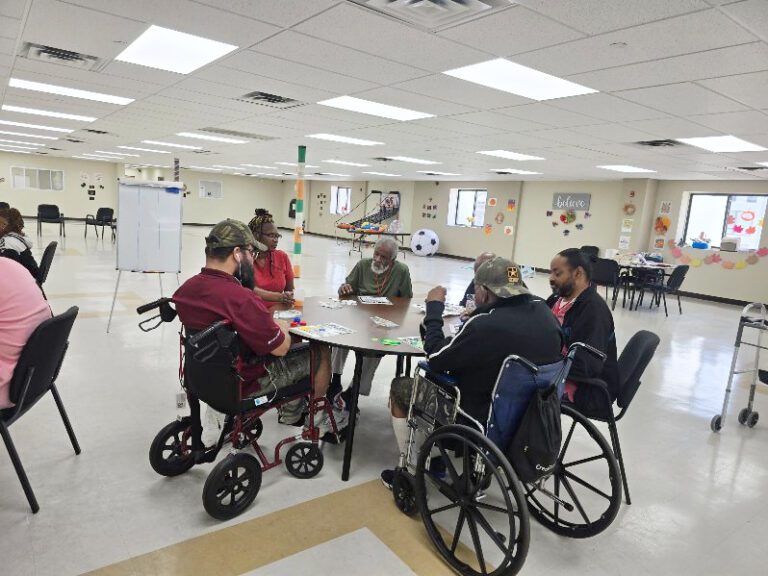
Card games, board games, puzzles and bingo fill a lot of the week. Many of them practice skills without feeling like practice: counting and simple math, matching, memory, and waiting for a turn.
Music and karaoke
Group sing-alongs, karaoke and music during group time bring the room together. Some participants love the microphone, and others are happy to clap along. Both count as taking part.
Exercise and movement
Light exercise, chair yoga, an indoor basketball game and ping pong keep participants active. All of it is supervised and adapted to each person’s ability, so someone who uses a wheelchair can join in alongside everyone else.
Daily living skills
Skill-building workshops focus on communication, daily living and problem-solving. Life enrichment activities such as cooking, gardening and themed events give participants practice with everyday tasks in a relaxed setting.
Quiet time
Not every activity is busy. There are quiet spaces for reading, relaxing or low-stimulation time, so a participant who needs a break can take one and rejoin the group when they are ready.
Which activities help build independence?
Independence comes from practice and from making real choices during the day. At Penn Village, the activities that build independence include:
- Creating safe crafts and projects with minimal supervision
- Practicing math skills through games
- Learning to socialize, start conversations and build friendships
- Helping to set their own individual activity schedule
- Choosing safe, center-approved activities to do on their own outside of a group
Because these skills are used every day rather than talked about once, participants tend to grow more confident with them over time.
How do activities support social skills?
For many adults with intellectual disabilities, the day program is where they see their friends during the week. Group activities give them regular chances to:
- Make friends in a safe environment
- Practice communication and teamwork
- Celebrate birthdays, holidays and accomplishments together
- Be part of a community with familiar faces every day
The goal is to keep every participant engaged in a way that fits them best.
How are activities personalized for each participant?
Staff adapt activities to each participant’s strengths, needs and comfort level, so everyone can take part at their own pace. One person may enjoy painting and quiet creative time, while another prefers group games or physical activity.
When someone joins, our team talks with the family about what the person enjoys, what they find difficult, and what goals matter to them. Activities are built around that and adjusted as staff get to know the person better.
What does a typical day look like?
Days follow a steady routine, because a predictable schedule helps many adults with intellectual disabilities feel comfortable. A typical day at Penn Village looks like this:
- Morning: door-to-door pickup, arrival and breakfast together.
- Mid-morning: group activities such as games, music or exercise.
- Late morning: skill-building or creative time, such as arts and crafts or a daily living activity.
- Midday: a catered lunch and social time.
- Early afternoon: choice time, when participants pick an activity they enjoy or take a quiet break.
- Late afternoon: an afternoon snack, a final group activity and getting ready to go home.
- Going home: door-to-door transportation back home.
Full-day and part-day options are available, and families can choose the days of the week that fit their schedule.
Who benefits most from a day program?
Day programs for adults with intellectual disabilities are a good fit for:
- Adults who want to get out of the house and make friends
- Adults who need support during the day but want to keep a strong sense of independence
- Adults who want to stay engaged physically, mentally and socially
- Families looking for safe, reliable daytime support
Day programs are licensed differently, so the best first step is to call and ask what a center’s license covers for your family member.
How do day programs support families?
A day program gives families consistent support during the week. Their family member has care during the day, including a registered nurse on staff. Meals and transportation are handled. And caregivers have time for work, appointments and taking care of themselves, knowing their loved one is safe and engaged.
What results can families expect over time?
With regular attendance, participants often gain:
- More independence through daily practice
- Lasting friendships and a sense of community
- Greater confidence in social and life skills
- Better physical health through nurse-approved activities
Questions to ask about activities when you tour a day program
- Can I see this week’s activity calendar?
- How do you adapt activities for different abilities?
- Can participants choose their own activities?
- Is there a quiet space for someone who needs a break?
- How do you work on daily living skills?
For a longer list, see our guide to questions to ask when touring an adult day care center.
Frequently asked questions
What is a day program for adults with intellectual disabilities?
It is a structured daytime service where adults with intellectual disabilities spend the day in a safe, supervised setting with activities, skill-building, meals and social time, then return home in the evening.
What activities are offered?
Common activities include arts and crafts, card and board games, puzzles, bingo, music and karaoke, light exercise and chair yoga, indoor basketball and ping pong, social skills groups, and daily living activities such as cooking and gardening.
Are activities adapted to each person?
Yes. Staff adapt activities to each participant’s strengths, needs and comfort level, and participants help set their own activity schedule. Quiet spaces are available for anyone who needs a break.
Are meals and transportation included?
Penn Village provides a catered breakfast, lunch and afternoon snack approved by a nutritionist, and offers door-to-door, wheelchair-accessible transportation. Call 267-437-2898 to confirm transportation for your address.
Want to see the activities in person?
Call our team to ask questions or set up a tour of the center in Germantown.
Related reading & resources

